End & Memory
How the man who lifted a people up behind him met a new age.
The end of an age
The establishment of Soviet power overturned Taghiyev's life. The oil fields, factories, palace and capital were nationalised; the man who had given the people a whole fortune lost almost everything in his old age. From luxury he moved to his country house in Mardakan.
Haji Zeynalabdin Taghiyev died in 1924 in Mardakan, at a very advanced age — about eighty-six. With him went a whole age of oil-boom Baku. His widow Sona outlived her husband by years and died in poverty.
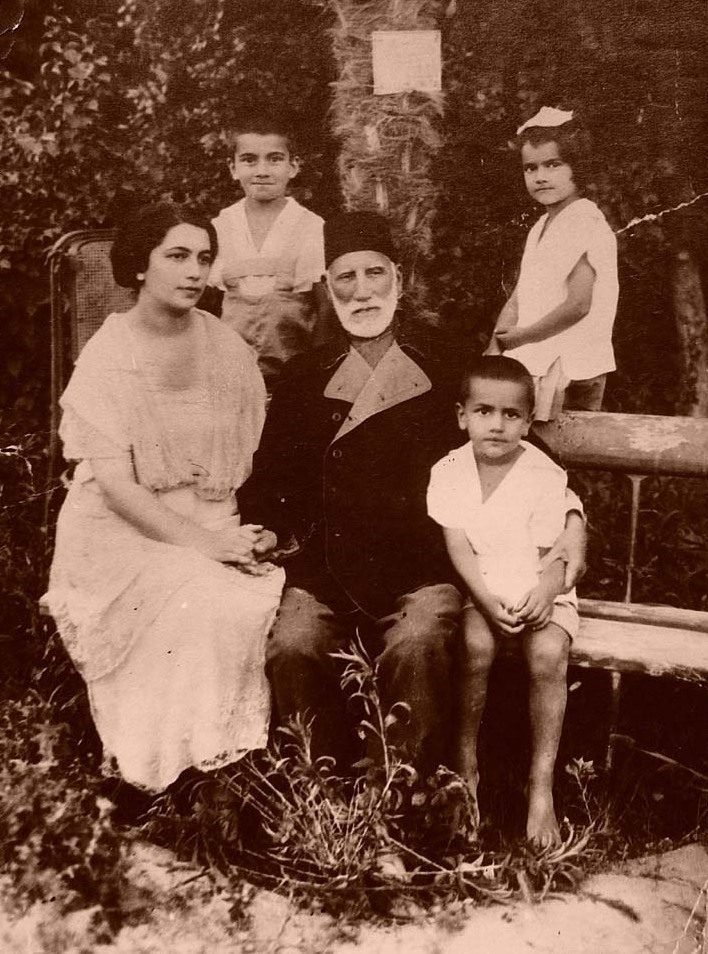
What remained after him
The fields and the palace could be confiscated, but not the good Taghiyev had done. The girls' school, the water supply, the theatre, thousands of educated people — all of it remained. Today in Azerbaijan the name of Taghiyev is a synonym for generosity and enlightenment, and his palace has become the museum of a whole country.
The essentials, briefly
A Baku oil industrialist and the greatest philanthropist of Azerbaijan of the late 19th and early 20th centuries, who rose from a poor stonemason to a millionaire and enlightener of his people.
Above all for his philanthropy: he built the first secular school for Muslim girls, funded the water supply, the theatre, the translation of the Quran and the education of youth.
The first secular school for Muslim girls in the Russian Empire (Baku, 1901). Taghiyev obtained permission, built and maintained it — it was a revolution in education.
A former stonemason and contractor, in the 1870s he struck oil on plots at Bibi-Heybat near Baku, and in 1897 sold the oil business to the British for about five million rubles.
Taghiyev's palace in central Baku was nationalised after the revolution; today it houses the National Museum of History of Azerbaijan.
In 1924 in Mardakan near Baku, at a very advanced age, after Soviet power had confiscated his property.
You can take the fields and the palace, but not the school you built and not the people you educated.